Dexcom G7 and 15 Day

Dexcom’s smartest technology delivers superior accuracy on day 1,
for early, actionable data†,‡,2

The G7 15 Day builds upon the G7 features you expect, now with additional enhancements.
• Longest wear time of any CGM – 15.5 days of wear (including a 12-hour grace period),§,3,4
• Fast onboarding, more intuitive login – Getting started is easier than ever, and patients can now use facial recognition or thumbprint to log in
• The most accurate glucose readings – Unrivaled accuracy so you can prescribe with confidenceII,2,5
• Convenient meal and event tracking– Snap photos that track activities, meals, and medications, including GLP-1 agonists

Check Out This Quick Dexcom Video!
Watch how the Dexcom G7 CGM System can help your patients better manage their diabetes. This video provides a quick overview of the Dexcom G7 CGM System and how it can support your patients with type 1 or insulin-treated type 2 diabetes.
Compare Dexcom G7 CGM Systems

Dexcom G7 sensor
- For ages 2 years and older
- 10-day lifespan
- Size: 1.07 x 0.94 in
- All-in-one sensor and transmitter
- 30-minute warmup
- 12-hour grace period for sensor swap
- Connects with iLet Bionic Pancreas, Omnipod© 5,
Tandem Mobi system™, Tandem t:slim X2™

Dexcom G7 15 Day sensor
- For adults ages 18+
- 15-day lifespan
- Size: 1.07 x 0.94 in
- All-in-one sensor and transmitter
- 1-hour warmup
- 12-hour grace period for sensor swap
- Connects with iLet Bionic Pancreas, Omnipod© 5
__________
Coming first half of 2026:
Tandem Mobi system™ & t:slim X2™
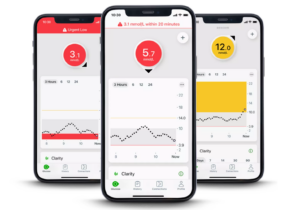
Customizable alarms to help keep your patients on track
The Dexcom G7 and G7 15 Day provide personalized alarms that provide alerts to patients up to 20 minutes before a low or high glucose reading. Patients can now enjoy a greater peace of mind.
Learn More About Dexcom and Our Capabilities
Learn MoreCheck out our Frequently Asked Questions
Dexcom G7 is for patients two years and older with any type of diabetes, including type 1, type 2, or gestational diabetes.
Dexcom G7 15 Day is designed for adults 18 years and older with all types of diabetes, including type 1, type 2, or gestational diabetes.
For patients under 18, Dexcom G7 remains the most accurate and powerful CGM system1.
- Mean absolute relative difference (MARD) accuracy: The Dexcom G7 15 Day system is slightly more accurate with an overall MARD of 8.0%1 compared to the Dexcom G7 system, which holds a MARD of 8.22%
- Wear time: The Dexcom G7 15 Day sensor has a 15.51* day wear time (includes 12-hour grace period) that is ~50% longer than the 10.5 day wear time (includes 12-hour grace period) of the Dexcom G7 sensor. This means reduced burden from sensor changes, fewer sensor start days, and less waste per month.
- Age indication: The Dexcom G7 15 Day system is for adults 18 years and older1. The Dexcom G7 system is for patients who are 2 years and older.
1 Dexcom G7 15 Day User Guide. 2 Dexcom G7 User Guide.
†Fingersticks required for diabetes treatment decisions if symptoms or expectations do not match readings.
Dexcom G7 15 Day sensor uses a new algorithm that allows for 5 additional days of wear, currently requiring a 60-minute warm-up.
*Per clinical studies, not all sensors may last 15 days. †A study was conducted to assess the sensor life where 73.9% of sensors lasted the full 15 days. In other words, when using the product per the package labeling, approximately 26% of sensors may not last for the full 15 days. ‡Fingersticks required for diabetes treatment decisions if symptoms or expectations do not match readings.§Excludes implantable CGM systems. IIDexcom G7 15 Day is NOT indicated for pediatric patients.¶Based on data obtained from a survey of patients using a Dexcom CGM system not available in the United States. #Individual prices may vary depending on insurance coverage. Under Medicare’s DME fee schedule, reimbursement and coinsurance for CGM’s using CPT codes A4239 and E2103, are the same, regardless of CGM brand. **Smartphone sold separately.
1 Dexcom, (VV-07576) Data on File, 2025. 2 Garg SK, et al. Diabetes Technol Ther. 2025;27(6):413-502. 3 Dexcom G7 15 Day User Guide. 4 Data on file (VV-07558), Dexcom; 2025. 5 Data on file (VV-07560). Dexcom; 2025. 6 Data on file (VV-07597). Dexcom; 2025. 7 Beck RW, et al. JAMA. 2017;317(4):371-378. 8 Beck RW, et al. Ann Intern Med. 2017;167(6):365-374. 9 Martens T, et al. JAMA. 2021;325(22):2262-2272. 10 Welsh JB, et al. J Diabetes Sci Technol. 2024;18(1):143-147. 11 Clark TL, et al. Diabetes Technol Ther. 2024;26(10):700-708. 12 Ehrhardt N, et al. Clin Diabetes. 2020:38(2):126-131.
BRIEF SAFETY STATEMENT: Failure to use the Dexcom Continuous Glucose Monitoring System and its components according to the instructions for use provided with your device and available at https://www.dexcom.com/safety-information and to properly consider all indications, contraindications, warnings, precautions, and cautions in those instructions for use may result in you missing a severe hypoglycemia (low blood glucose) or hyperglycemia (high blood glucose) occurrence and/or making a treatment decision that may result in injury. If your glucose alerts and readings from the Dexcom CGM do not match symptoms, use a blood glucose meter to make diabetes treatment decisions. Seek medical advice and attention when appropriate, including for any medical emergency